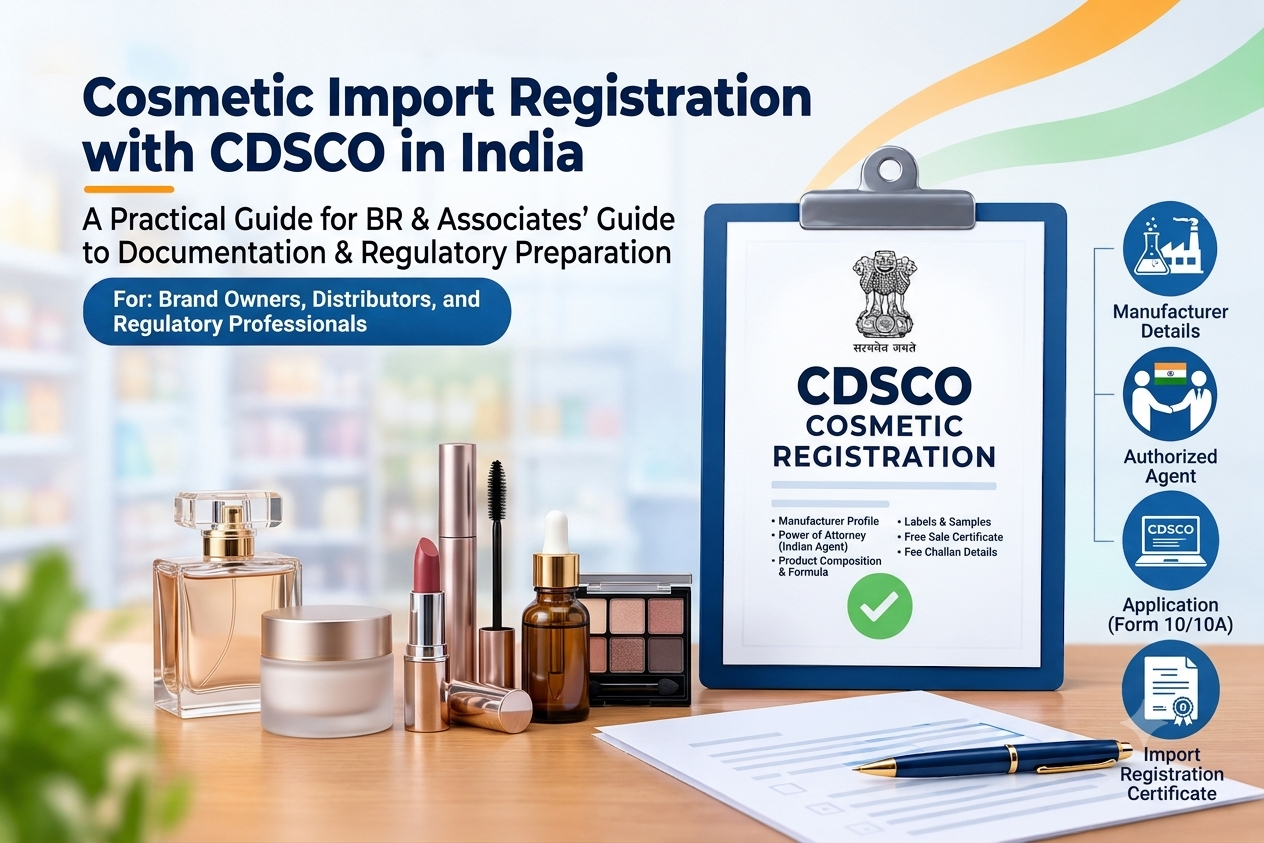
CDSCO Cosmetic Import Registration in India: What Importers Must Know Before Launching
India's beauty and personal care market offers opportunities for international cosmetic brands, distributors, importers and Indian businesses looking to introduce new products. However, importing cosmetics involves more than finding a manufacturer, negotiating prices and arranging shipping. Businesses must also understand the applicable regulatory requirements before bringing products into India.
CDSCO cosmetic import registration is an important consideration for companies planning to import covered cosmetic products into the Indian market. The registration framework helps establish the identity of the products, manufacturing premises and parties responsible for the application.
The Central Drugs Standard Control Organization (CDSCO), under the Ministry of Health and Family Welfare, administers the relevant import registration framework. The Cosmetics Rules, 2020, set out the requirements that applicants must examine before applying.
In this guide, BR & Associates explains what cosmetic import registration means, who may apply, what information to prepare, how the process generally works and which mistakes businesses should avoid.
What Is CDSCO Cosmetic Import Registration?
CDSCO cosmetic import registration is the regulatory registration process applicable to covered cosmetics imported into India under the Cosmetics Rules, 2020.
The rules define cosmetics by their intended use, including products applied to the human body for cleansing, beautifying, promoting attractiveness or altering appearance. The precise classification depends on the product's purpose, composition, claims and applicable legal definition.
For covered imported cosmetics, product registration and the relevant manufacturing premises must be considered before import. Businesses should not assume that a product is exempt merely because it is already sold legally in its country of origin.
The registration framework identifies relevant products and manufacturing sites and provides a basis for the authorities to review supporting documentation. It also means that a business should consider its variants, pack sizes and manufacturing arrangements when planning an application.
Who Should Consider Cosmetic Import Registration?
The exact applicant and registration requirements depend on the business arrangement and the current rules. Common situations include the following.
1. Indian cosmetic importers
An Indian business importing cosmetics from another country should determine whether the products require registration under the Cosmetics Rules, 2020. This applies to businesses planning to distribute products through retailers, e-commerce platforms, salons, professional channels or other lawful sales channels.
The importer should collect product information from the overseas manufacturer early rather than waiting until the shipment is ready.
2. Overseas cosmetic manufacturers
A foreign manufacturer may work through an authorized agent in India or another permitted applicant arrangement. The manufacturer's authorization and the identity of the relevant manufacturing premises are important parts of the application preparation process.
The authorization should clearly identify the parties, the products covered and the manufacturing locations relevant to the application.
3. Indian subsidiaries and authorized representatives
Some overseas brands operate through an Indian subsidiary, while others appoint an authorized Indian agent. The correct arrangement should be confirmed before filing.
The applicant should make sure the entity named in the application is consistent with the authorization documents and the information supplied by the manufacturer.
4. Brands introducing new variants or pack sizes
An existing registration should not automatically be assumed to cover every new variant, pack size or manufacturing location. Businesses should review the scope of their existing certificate and determine whether an endorsement, additional application or another action is required under the current process.
Which Products Are Considered Cosmetics?
Cosmetics can include a broad range of beauty and personal care products, depending on their intended purpose and the applicable definition. Examples may include skin-care creams, lotions, shampoos, conditioners, perfumes, makeup products, lip products and other preparations used for cleansing or beautifying.
These examples are illustrative. A product that makes therapeutic or disease-treatment claims, or whose intended use places it under another regulatory category, may require a different assessment.
For example, a moisturising cream marketed for ordinary skin care may be assessed differently from a product making claims to treat a medical condition. Businesses should not decide classification on the basis of product name alone.
Before applying, prepare a product list that includes the commercial name, intended use, composition, presentation, variants and manufacturing site. Review any special claims, restricted ingredients or applicable standards before moving to the next stage.
What Documents Should Importers Prepare?
Document requirements depend on the application and current CDSCO guidance. Preparing a complete file before starting can reduce inconsistencies and requests for clarification.
Business and applicant information
Prepare the Indian applicant's legal name, business address, contact details, authorized person's information and relevant business documents. Ensure that the information is consistent across the application and supporting records.
Manufacturer authorization
The authorization should establish the relationship between the overseas manufacturer and the authorized Indian applicant. It should identify the manufacturer and relevant premises, the Indian representative and the products covered.
The format, execution and authentication requirements should be checked against the applicable rules and current CDSCO guidance. Do not assume that an informal email or distributor agreement will meet the regulatory requirements.
Product information
Create a product-wise list with names, variants, pack sizes, categories and manufacturing locations. If product names differ across the manufacturer's documents, Free Sale Certificate or authorization, prepare a clear reconciliation table.
Free Sale Certificate and supporting records
The relevant application may require a Free Sale Certificate or other prescribed documents, depending on the circumstances. Confirm the current checklist rather than relying on a generic document list from an older application.
Label and packaging details
Collect the proposed label, packaging information, ingredient details and claims. Review whether the information is consistent across product documents and whether it meets the applicable Indian requirements.
Fee and application records
Check the current fee provisions and accepted payment method before submitting. Save payment acknowledgements, application references and copies of uploaded documents.
How Does the CDSCO Cosmetic Import Registration Process Work?
Step 1: Assess the product and business arrangement
Identify the cosmetics to be imported and determine who will act as the applicant. Confirm the overseas manufacturer, manufacturing site and authorized Indian representative, where applicable.
Step 2: Confirm product classification and registration scope
Prepare a product list and determine how each product, variant and pack size should be represented in the application. Check whether any product raises classification or claims-related questions.
Step 3: Obtain manufacturer documents
Request the authorization and relevant product records from the overseas manufacturer. Provide a checklist and a clear deadline so that missing information can be addressed before filing.
Step 4: Prepare the application
For the applicable cosmetic import registration process, the application is generally made in Form COS-1, with the registration certificate issued in Form COS-2. Follow the latest official portal instructions and application checklist.
Step 5: Review the complete application
Before submission, verify the product names, manufacturer details, premises, variants, pack sizes and supporting documents. Confirm that the authorization and product information match the application.
Step 6: Submit through the prescribed portal
Use the designated CDSCO online system and follow the current workflow. Retain the acknowledgement or reference number and a complete copy of the submitted application.
Step 7: Respond to queries
If the reviewing authority raises a discrepancy, identify the exact issue and respond with corrected information or supporting evidence. Keep a record of the clarification submitted.
Step 8: Review the certificate and scope
After approval, check the certificate details carefully. Ensure that the approved products and manufacturing premises match the intended import plan before treating the registration as ready for operational use.
Common Mistakes That Can Delay an Application
- Inconsistent product names: A product may be described differently in the application, authorization and supporting certificate. A reconciliation table can help avoid confusion.
- Incomplete manufacturer authorization: Missing premises, product details or required authentication can create problems during review.
- Ignoring variants and pack sizes: Businesses should check whether their planned product range is fully covered rather than assuming that one product name covers every presentation.
- Starting too late: Collecting overseas documents can take time. Begin the regulatory review before committing to a commercial launch date or shipment.
- Using outdated guidance: Rules, forms and portal instructions may change. Always check the current official guidance before submitting.
- Treating registration as the only requirement: Importers should also assess applicable labelling, quality, safety, customs and other requirements relevant to their products and business.
How BR & Associates Can Help
BR & Associates can assist businesses with understanding the cosmetic import registration process, organizing application information, coordinating document preparation and identifying inconsistencies that need to be addressed before filing.
The required support depends on the product range, manufacturing arrangement and documents available. Businesses should keep product lists, ingredient details, labels, authorization records and manufacturer information ready for an initial review.
For service information, visit the existing CDSCO cosmetic import registration page.
Frequently Asked Questions
1. What is CDSCO cosmetic import registration?
It is the registration process under the Cosmetics Rules, 2020, applicable to covered cosmetics imported into India. It involves the prescribed application and supporting product and manufacturing-site information.
2. Which forms are used for cosmetic import registration?
The general import registration route uses Form COS-1 for the application and Form COS-2 for the registration certificate. Confirm the current process and any product-specific requirements before applying.
3. Can an Indian importer apply on behalf of a foreign manufacturer?
The rules provide for applications through permitted arrangements, including an authorized Indian agent or importer, subject to the applicable conditions and supporting authorization documents.
4. Does registration of one cosmetic automatically cover all variants?
Not necessarily. Businesses should review the approved scope and determine whether variants, pack sizes or manufacturing-site changes require additional action under the current process.
5. Can a cosmetic be imported if it is already approved in another country?
Foreign-market approval does not automatically replace Indian requirements. The importer should assess the Cosmetics Rules, 2020, and the applicable Indian registration process.
6. What is the most important preparation step?
Prepare a consistent product-wise document set and ensure that the manufacturer authorization, product details and manufacturing-site information match across the application.
Conclusion
Cosmetic import registration should be part of the import planning process, not a last-minute administrative task. Businesses that confirm product classification, identify the correct applicant, collect manufacturer documents and review the application carefully are better prepared to navigate the process.
For help understanding the process and preparing the documentation, BR & Associates can support businesses seeking cosmetic import registration in India.
Request A Call Back
Have questions about compliance? Our team will get in touch to provide the right guidance—just share your contact details.